

Mid-September brings a noticeable shift in pool care.
The days may still feel warm, but cooler nights, shorter daylight hours, and the first increase in leaves and debris can change how your pool behaves. Chlorine demand may begin to drop. Baskets can fill faster. Small leaks and equipment problems that were easy to overlook during summer can become bigger headaches if they are left alone.
The good news? You do not need to overhaul everything overnight.
A few simple adjustments now can keep your water clear, protect your equipment, and make the transition into fall much more stress-free.
SHIFT OUT OF SUMMER MODE
Your pool may not need the same treatment in mid-September that it needed in July.
Cooler water usually means lower chlorine demand. That does not mean you can stop testing or switch off your system without checking the water first. It means your routine may need to change gradually.
Keep testing your pool water regularly and watch for these common shifts:
- Lower chlorine demand can help you avoid over-treating your pool as water temperatures begin to fall.
- Balanced pH and alkalinity can help protect surfaces, heaters, salt cells, and other equipment.
- Shorter swim days can reduce the amount of chlorine needed to maintain clear water.
- A consistent testing schedule can help you respond to changes before the water turns cloudy or green.
For many pools, maintaining pH around 7.4–7.6 and free chlorine in the appropriate range for the pool type is a reasonable starting point. Your ideal levels can vary based on your pool finish, stabilizer level, sanitizer system, and local conditions.
The important thing is not to guess.
Test first, make small adjustments, and keep an eye on how the water responds. If your pool is on our weekly pool service schedule, we handle these seasonal adjustments as part of keeping your water covered.
STAY AHEAD OF FALL DEBRIS
Leaves may not be covering the pool yet, but they are often starting to show up around the deck, skimmer, and equipment area.
This is the time to get ahead of them. Once leaves sit on the pool floor, they can stain surfaces, add organic material to the water, and create extra chlorine demand. Windy days can also push debris into baskets and restrict water flow.
A simple mid-September debris routine includes:
- Skimming the surface more often helps keep leaves from sinking and staining the pool.
- Emptying the skimmer and pump baskets helps maintain proper circulation and protects the pump.
- Brushing steps, corners, and walls helps prevent debris from collecting in low-flow areas.
- Vacuuming after windy days helps remove material before it feeds algae growth.
- Using a leaf net when needed can reduce the daily cleanup without adding unnecessary hassle.
Do not wait until the pool looks overwhelmed. A few minutes of prevention now can save hours of cleanup later.
And if leaves are falling faster than you can keep up, we can help with other pool services, including one-time cleanups and seasonal maintenance.
CHECK YOUR EQUIPMENT BEFORE FALL
Your pool equipment works hard all season. Mid-September is an excellent time to make sure it is ready for changing conditions: before a small issue becomes a weekend emergency.
Start with the basics:
- A steady pump prime and consistent water flow can help confirm that circulation is working properly.
- A clean filter can help your system manage the extra debris that often arrives with fall weather.
- Normal pressure readings can help you spot a clogged filter or flow restriction early.
- A quiet pump can help you catch unusual grinding, rattling, or humming before a motor problem gets worse.
- Dry equipment connections can help identify leaks before they damage nearby components.
If your filter pressure is higher than normal, your pump sounds different, or the water is not moving as it should, do not ignore it.

We inspect pumps, filters, plumbing connections, valves, heaters, and related equipment as part of our preventative approach. Our goal is not to recommend a replacement just because a component is older.
Our goal is to tell you what is actually happening, what needs attention now, and what can safely wait.
That is the difference between honest pool care and an unnecessary sales pitch.
SALTWATER POOL TIPS FOR COOLER WEATHER
Saltwater pools still require regular maintenance. They produce chlorine on-site, but they are not maintenance-free.
As temperatures cool, your salt system may not need to run at the same output level it used during the hottest part of summer. Make changes gradually and confirm them with actual chlorine testing rather than relying only on the controller display.
Keep these points in mind:
- Reducing salt-cell output gradually can help prevent excessive chlorine production as demand decreases.
- Weekly pH checks can help control the upward drift that is common with saltwater systems.
- Inspecting the salt cell for visible calcium scale can help protect its performance and service life.
- Cleaning the cell only when buildup is present can help avoid unnecessary wear from repeated acid washing.
- Checking unions, O-rings, and fittings can help catch salt residue, corrosion, or small leaks early.
- Using liquid chlorine temporarily may be more practical than turning the salt system to maximum output after heavy debris or swimming activity.
Always follow your equipment manufacturer’s instructions, especially when adjusting output or cleaning the cell.

If your salt system shows a warning, the chlorine level will not hold, or the equipment is making unusual sounds, our pool equipment repair team can help determine whether the issue is with the cell, pump, plumbing, controls, or water chemistry.
CATCH SMALL LEAKS EARLY
A small drop in water level can be easy to dismiss in September.
You may assume it is evaporation, splash-out, or a busy summer. Sometimes it is. But if you are adding water more often than usual, it is worth taking a closer look.
Watch for:
- A water level that drops noticeably faster than normal can point to a leak rather than evaporation.
- Damp soil, unusually green grass, or soft areas near the pool can signal underground plumbing trouble.
- Sinking pavers or shifting deck areas can indicate that water is washing away supporting soil.
- Persistent air bubbles in the return lines can point to an air leak on the suction side.
- A pump that struggles to prime can be a sign of a suction-side leak or another circulation issue.
- Frequent chemical adjustments can happen when treated water is escaping and fresh water is constantly being added.
You can perform a basic bucket test at home to compare evaporation with suspected water loss.
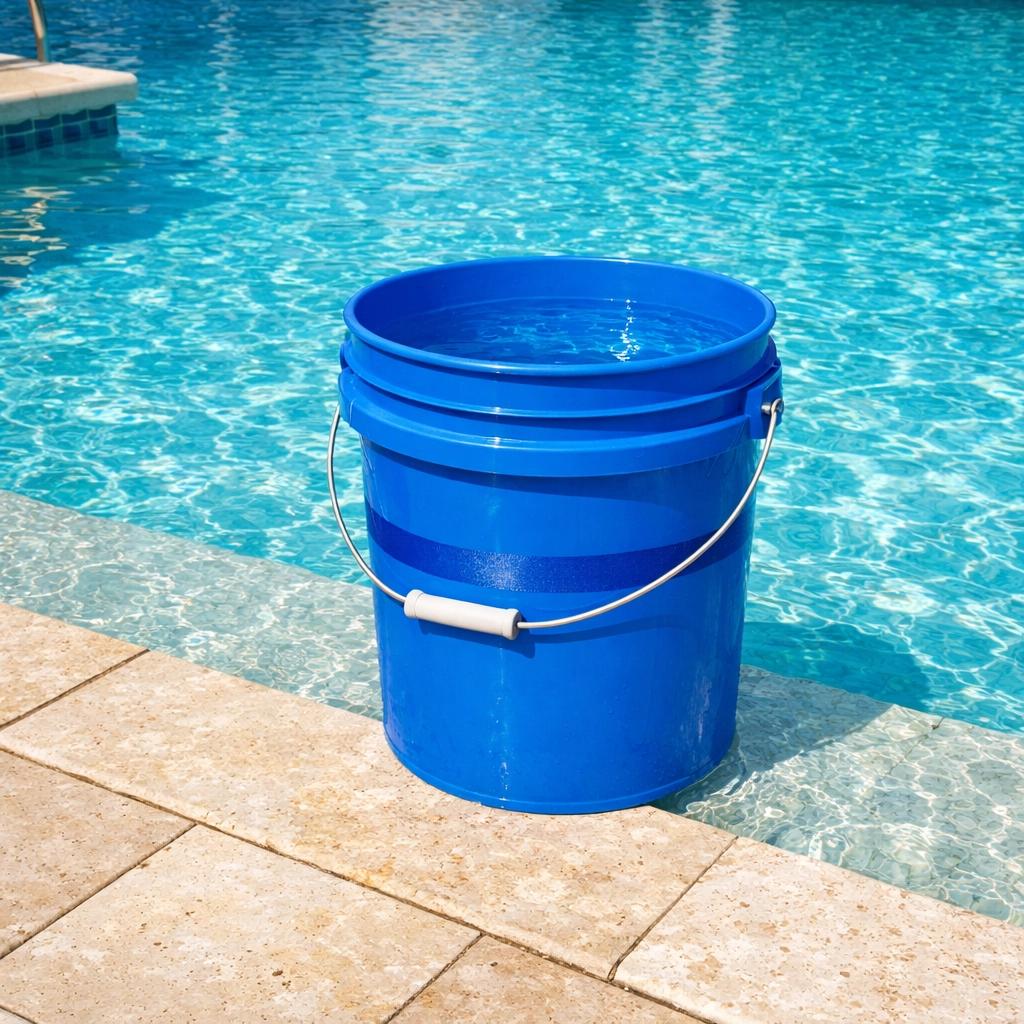
Place a bucket of pool water on a pool step. Mark the water level inside the bucket and the pool water level outside it. Turn off the autofill if possible, then compare the levels after about 24 hours.
If the pool loses significantly more water than the bucket, it is time to investigate.
Early attention is usually easier, less disruptive, and less expensive than waiting until a leak affects the deck, plumbing, or equipment.
KNOW WHEN TO CALL FOR REPAIR
Not every pool problem requires an emergency visit. But some warning signs should not be put off until next season.
Consider scheduling a professional inspection or repair when:
- Your pump repeatedly loses prime or shuts off unexpectedly.
- Your filter pressure rises quickly after cleaning.
- Your equipment makes grinding, screeching, or loud vibrating sounds.
- You see water around unions, valves, the pump lid, or filter housing.
- Your heater displays an error code or fails to complete a heating cycle.
- Your salt system shows repeated low-salt or inspect-cell warnings.
- Your pool continues losing water after evaporation has been ruled out.
- Your water stays cloudy even though the chemistry appears balanced.
Calling earlier does not automatically mean replacing equipment. In many cases, the right repair, adjustment, seal, or cleaning is enough to get the system back on track.
We will give you a clear recommendation, explain the options, and let you know what is truly necessary. No unnecessary upsells. No pressure.
YOUR MID-SEPTEMBER CHECKLIST
Use this quick list to keep your fall transition easy:
- Test your water consistently and adjust chlorine gradually as temperatures cool.
- Skim leaves, empty baskets, and vacuum before debris has time to settle.
- Check filter pressure and schedule cleaning when the system shows signs of restriction.
- Inspect pumps, filters, plumbing, heaters, and salt cells for unusual sounds, scale, moisture, or warnings.
- Watch the water level and investigate unexplained loss before it becomes a larger repair.
- Start thinking about fall service needs without rushing into unnecessary equipment replacement.
At Limping Elk Pools, we believe reliable service means more than showing up and checking a box. We communicate before we arrive, let you know when service is complete, and provide detailed reports: including photos of your clear pool when appropriate.
We are veteran-owned, experienced, and committed to fair recommendations that keep your pool: and your week: covered.
READY FOR A STRESS-FREE FALL TRANSITION?
Want clear water, dependable equipment, and less pool-care hassle as the season changes?
Contact Limping Elk Pools to schedule weekly service, an equipment inspection, a leak check, or a one-time fall cleanup.
We will handle the details so you can enjoy the pool: and get your time back!